Everything to know before you go — geography, culture, and the practical questions every first-time visitor asks.
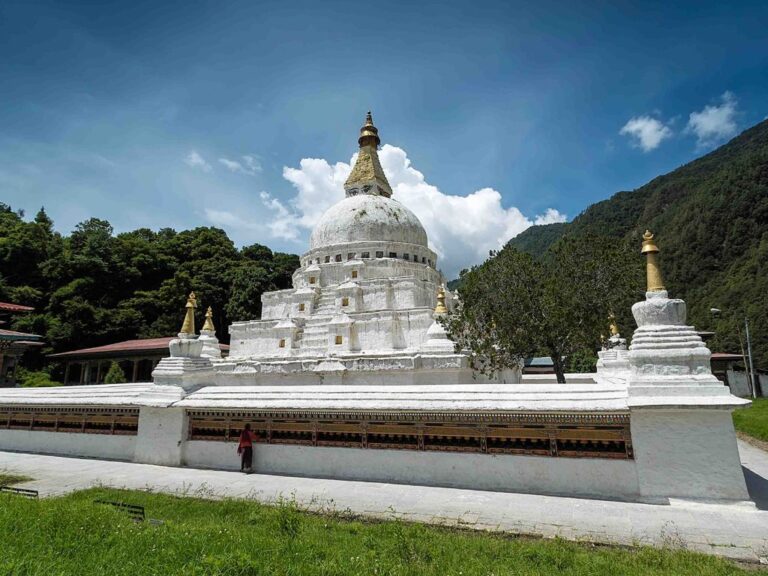
Bhutan is the only country in the world to prioritise Gross National Happiness alongside economic growth, and one of very few carbon-negative nations on earth. Wedged between India and China in the eastern Himalayas, it kept its borders closed to mass tourism until 1974, and still manages visitor numbers deliberately through the Sustainable Development Fee rather than leaving it to the market.
What that means for a traveller: no visa-on-arrival, no independent backpacking, and no mass hotel strips. Every visitor arrives on a route arranged by a licensed Bhutanese operator, which keeps the kingdom’s dzongs, monasteries and valleys as intact as they are.
Democratic constitutional monarchy since 2008, under His Majesty King Jigme Khesar Namgyel Wangchuck.
Around 780,000 people, making it one of the least densely populated countries in Asia.
Ranges from 200m in the southern plains to over 7,500m at Gangkhar Puensum, the world's highest unclimbed peak.
Dzongkha is the national language; English is the medium of instruction in schools and widely spoken.
Ngultrum (BTN), pegged 1:1 to the Indian Rupee, which is also accepted everywhere.
The constitution mandates at least 60% forest cover be maintained for all future generations — currently over 70%.
Flights to Paro, land border crossings, and what to expect on arrival.
Nine ready-built routes across the kingdom, or a private itinerary built around your dates.